

Shopping in AI conversations is quickly becoming the norm. Instead of clicking through search results and product pages, more shoppers are asking questions, comparing options, and even checking out directly within AI conversations.
Google’s recent announcements, including UCP, Business Agents, and Direct Offers, make this shift hard to ignore. Together, they show how Google is enabling commerce to happen wherever those conversations take place.
In this article, we’ll break down what Google UCP is, how it works alongside Business Agents and Direct Offers, and why it matters for ecommerce brands.
What is Google UCP?
Google UCP, short for Universal Commerce Protocol, is a new open standard for agentic commerce that works across the entire shopping journey, from discovery and buying to post-purchase support.
It’s co-built with Shopify, alongside early partners such as Etsy, Wayfair, Target, and Walmart, and endorsed by over 20 global commerce and payments companies including Adyen, American Express, Best Buy, Flipkart, Macy’s Inc., Mastercard, Stripe, The Home Depot, Visa, and Zalando.
UCP is platform-agnostic. Instead of locking commerce into a single marketplace or ecosystem, it allows merchants to make their products actionable wherever discovery happens, not just on Google or Shopify.
This includes:
- Google surfaces like Search, Shopping, and Gemini
- Third-party websites and apps
- AI-driven experiences and agents
UCP is also compatible with existing industry protocols like Agent2Agent (A2A), Agent Payments Protocol (AP2) and Model Context Protocol (MCP).
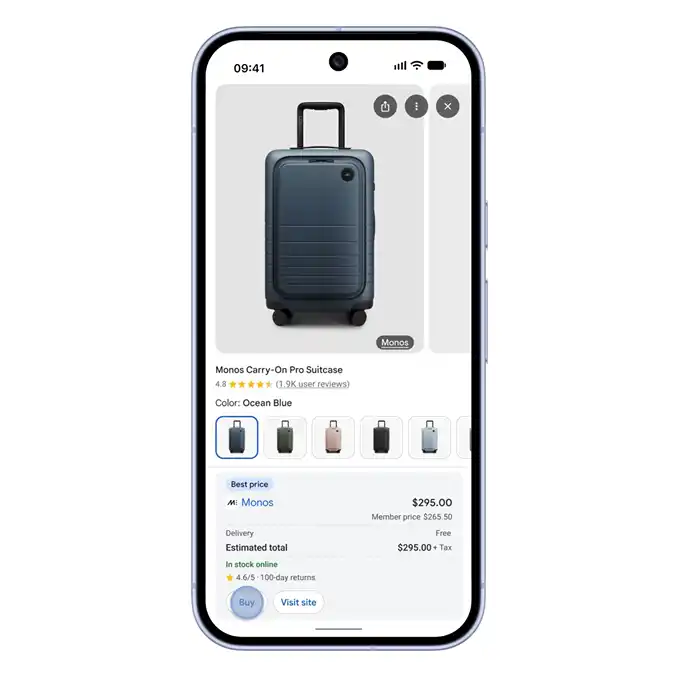
In practice, this enables shoppers to move from intent to transaction directly within AI-driven experiences like AI Mode or Gemini, using stored payment methods such as Google Pay in Google Wallet. Paypal will soon be supported as well. Importantly, merchants remain the seller of record. Beyond checkout, Google also plans to expand UCP-enabled capabilities to include discovering related products, applying loyalty rewards, and powering custom shopping experiences on Google.
What’s new in Google UCP for 2026?
Since its NRF launch in January, UCP has moved fast from a spec toward live commerce.
The March 2026 update (March 19) added three capabilities that turned UCP from a single-item checkout spec into a fuller commerce protocol for AI agents:
- Cart: agents can add one or more products to a cart in a single flow, not just buy one item at a time.
- Catalog: agents pull real-time product details like variants, inventory, and pricing straight from your store, so shoppers always see accurate information.
- Identity Linking: shoppers connect their retailer account to a UCP platform via OAuth 2.0, carrying over loyalty and member benefits like member pricing or free shipping.
- Plus simpler onboarding through Google Merchant Center.
Universal Cart. At Google I/O 2026, Google introduced Universal Cart, a cart designed to follow shoppers across Search, Gemini, YouTube, and Gmail (launching first in Search and Gemini in the US, summer 2026). Shoppers build one cart that can combine products from multiple retailers, and it works in the background to monitor price drops and inventory, flag product incompatibilities, and suggest alternatives, with the retailer staying the merchant of record. It’s built on UCP.
Together these move agentic checkout from a demo into something shoppers actually use across Google, which raises the bar on how complete and accurate your product data has to be.
Business Agent: A new way for shoppers to chat with brands on Google
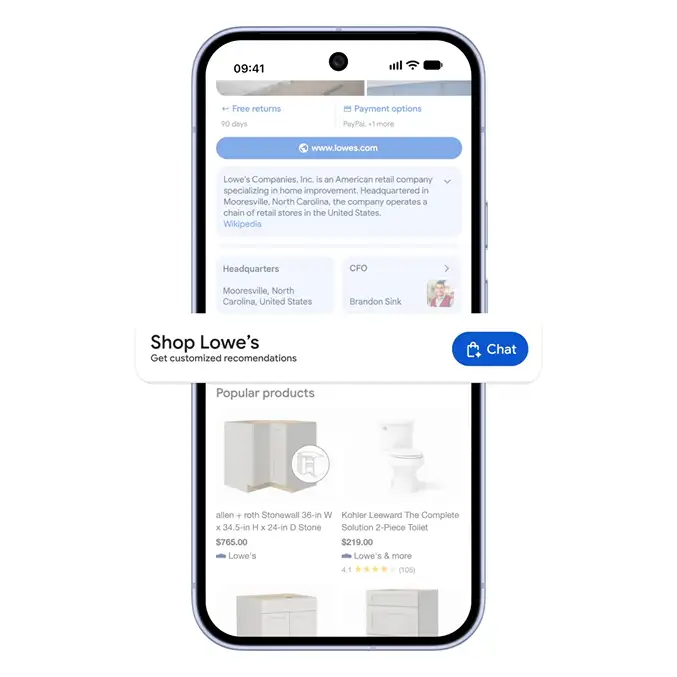
Google’s Business Agent is a branded AI agent that lets shoppers chat directly with merchants across Google surfaces.
It’s like having a digital sales associate on Google. Retailers can enable the Business Agent via Merchant Center and train it on their brand voice and product data, so the agent can answer product questions in the brand’s own tone directly within Google.
The Business Agent can also surface relevant offers and related products, and shoppers can complete a purchase within the conversational experience, without being redirected to a traditional storefront.
Direct Offers: Brands can now offer discounts directly within Google
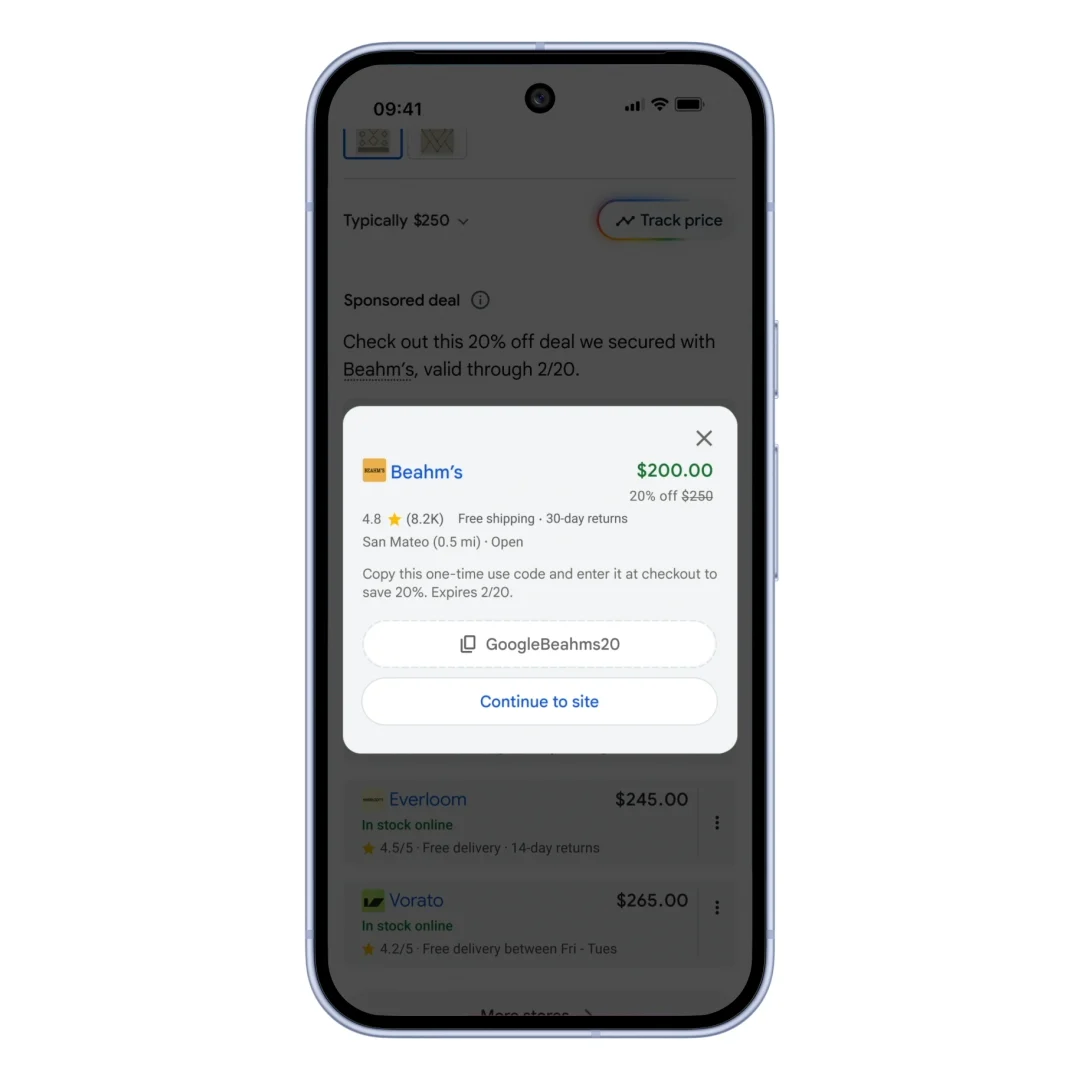
Direct Offers let ecommerce brands surface discounts and promotions directly within Google experiences, instead of relying solely on onsite banners, emails, or ads to communicate deals.
Retailers can set up relevant offers in their campaign settings and Google will use AI to determine when to surface them. During the pilot phase, only discounts are supported. But Google plans to expand it to other offer types such as bundles and free shipping.
Why Google UCP matters to ecommerce brands
Agentic commerce is becoming a default buying path
Agentic commerce is no longer tied to a single platform or interface. Across the ecosystem, AI-driven discovery and checkout are being enabled through a mix of open protocols and platform capabilities, including Google UCP and OpenAI’s ACP.
As discovery, comparison, and checkout become natively supported inside AI experiences, friction is removed. Shoppers no longer need to move between search results, product pages, and carts to complete a purchase.
As a result, more shoppers will discover and transact through a single interface: the AI conversation itself.
For ecommerce brands, the implication is clear. If AI systems cannot clearly understand, surface, and transact on your products, they are far less likely to appear when intent is expressed.
Product data accuracy and completeness become table stakes
In an agentic commerce environment, structured, complete, and up-to-date product data directly affects visibility, eligibility, and conversion across Google and AI surfaces.
Accuracy on standard attributes such as material, size, color, pricing, availability, and delivery details is no longer optional. When checkout happens directly within AI-driven experiences, outdated or inconsistent data can block transactions entirely.
Beyond traditional catalog fields, brands also need to introduce intent-level attributes. Alongside Business Agents, Google has announced dozens of new Merchant Center attributes designed for conversational discovery. These complement existing feeds and go beyond keywords to include signals like common product questions, compatibility, substitutes, and usage context.
Visibility shifts from keywords to intent matching
UCP and conversational commerce change how products surface. Visibility is no longer driven purely by keywords, bids, or category placement.
Instead, products are selected based on how well their data answers a shopper’s intent in natural language. Brands that structure their data to support comparisons, recommendations, and follow-up questions are more likely to be surfaced and transacted on by AI systems.
In practice, this means ecommerce brands are no longer just competing on traffic acquisition. They are competing on how understandable and usable their product data is to AI.
Conclusion
Google UCP is another signal that commerce happening directly within AI-driven experiences will become commonplace.
For ecommerce brands, product data, offers, and commerce logic need to be structured in ways AI systems can understand and act on, wherever shopping starts. That includes keeping downstream surfaces like Merchant Center accurate and current, not just the source platform.
As agentic and conversational shopping becomes more common, aligning data and commerce setups early will better position brands to compete in these new buying environments.


.avif)