





.svg)




Onboard data from every vendor brand

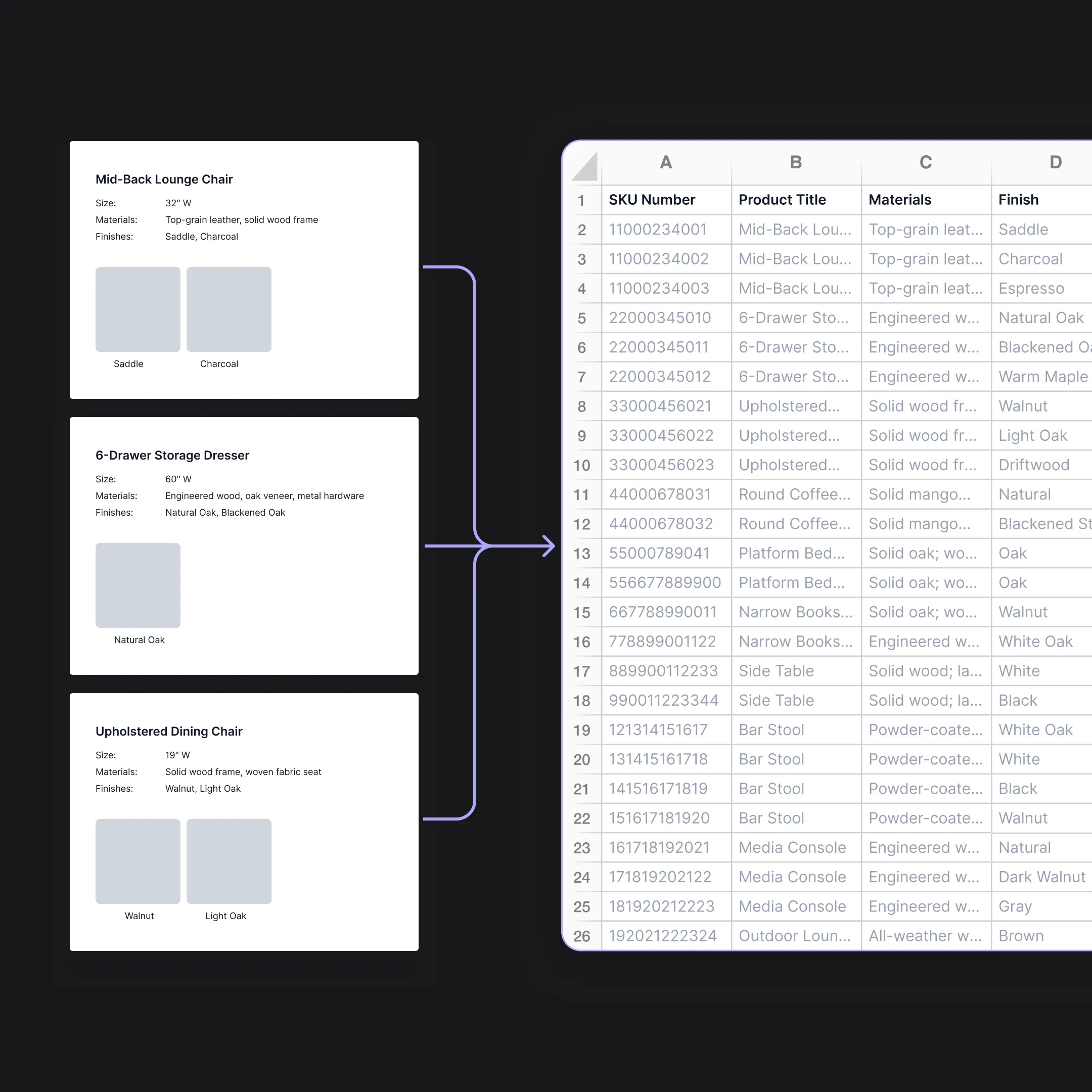
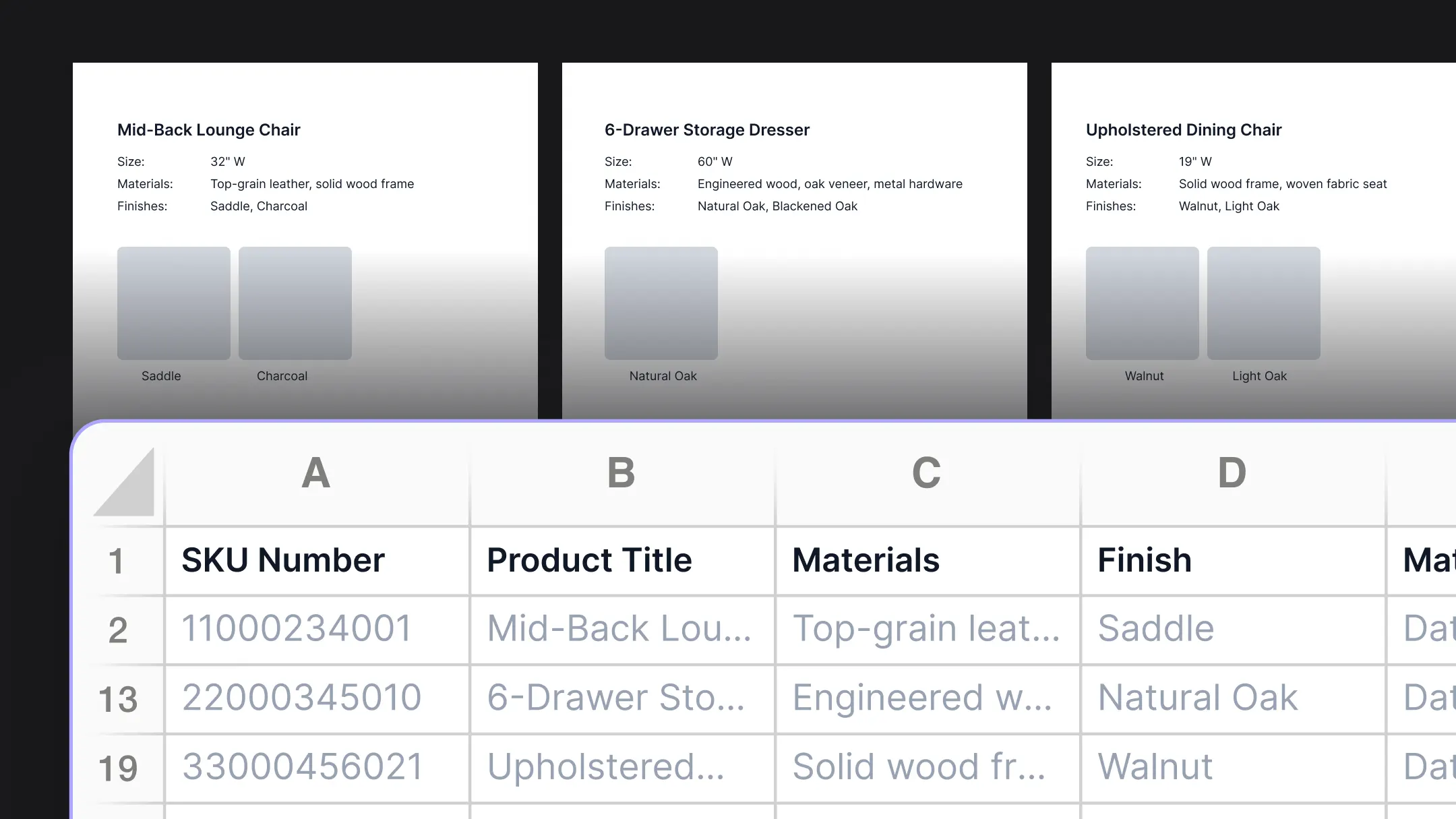
Vendors submit in the format they already use, or your merchandising team onboards on their behalf.
Vendor images are matched to the right products as they're uploaded.
Vendors submit products, and your team decides what goes live.

One taxonomy across every department
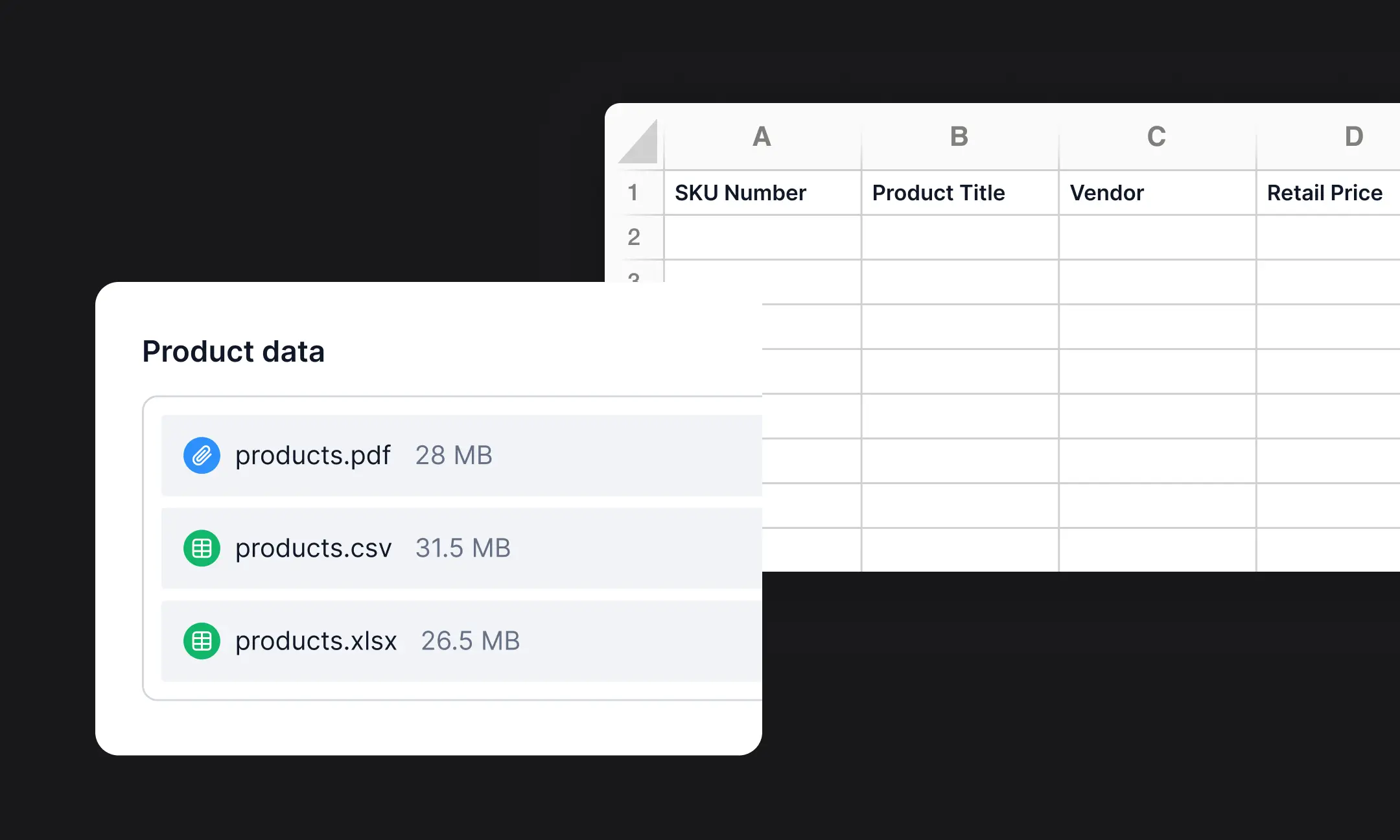
Every vendor's products land in your own category tree, following the definition and guidelines you write for each category.
Products that arrive with only a title and an image still get a category.
Each category gets its own attributes, so a filter in women's boots can cover every brand in the department.
Standardize vendor attributes and fill the gaps
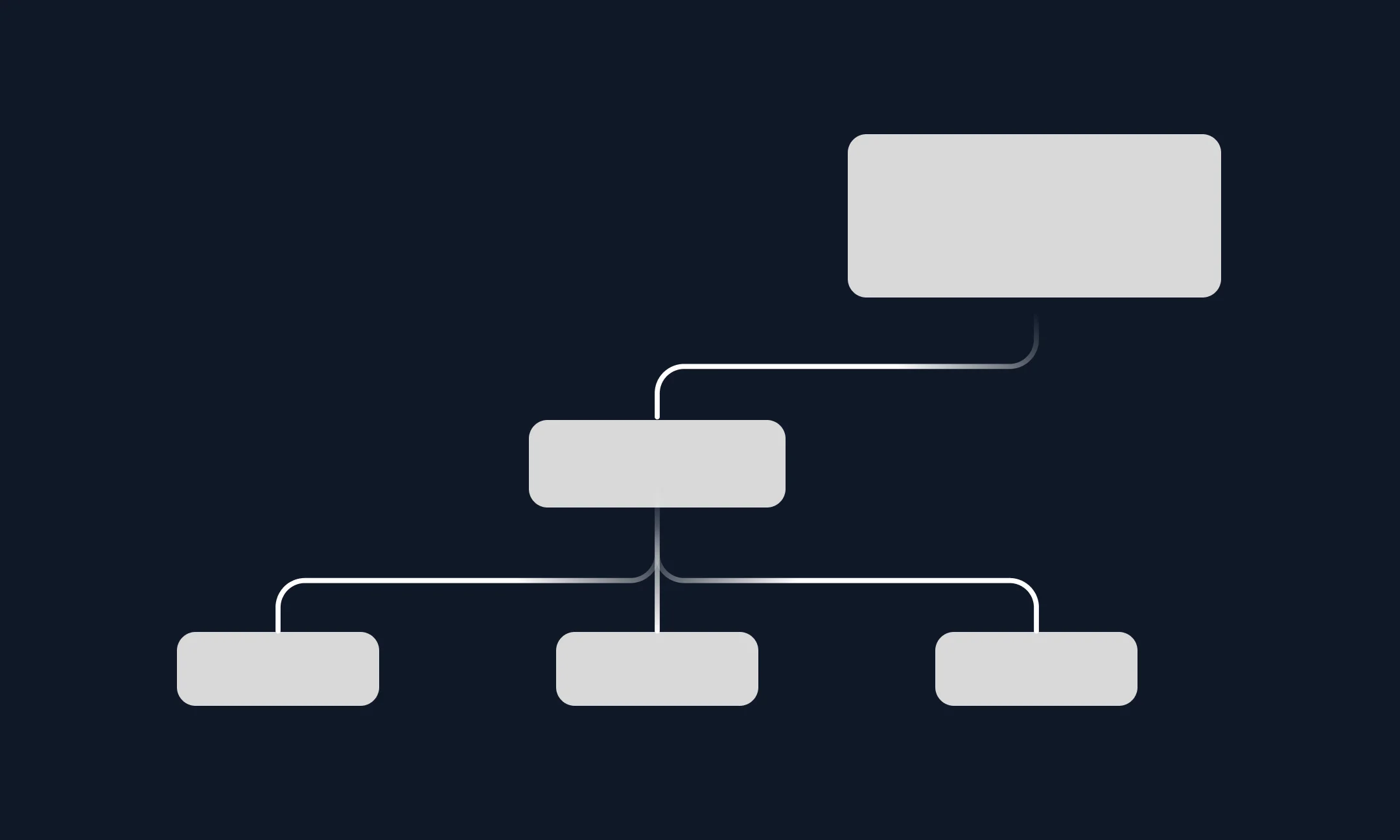
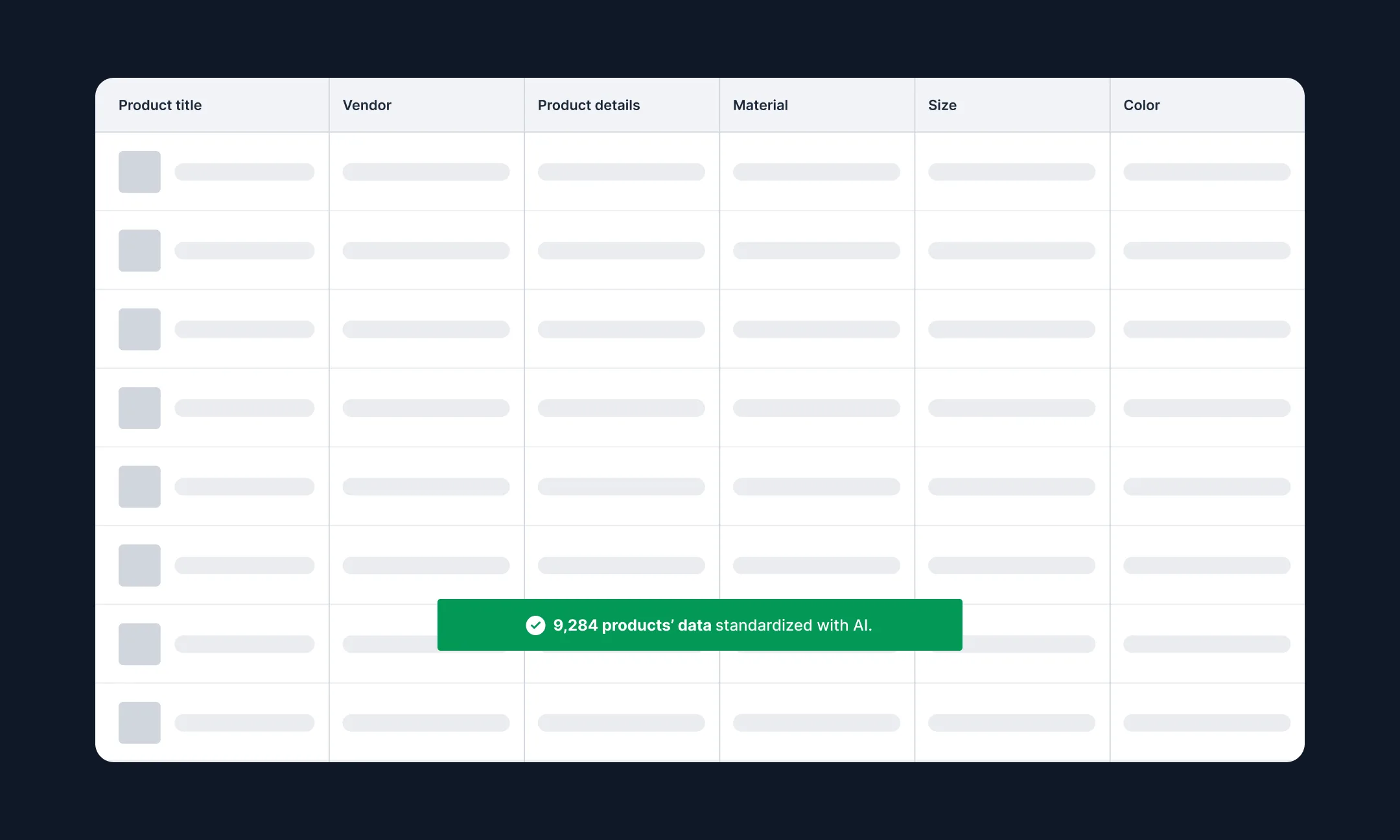
Each vendor's values are mapped to your attributes and list of values, so one color or size reads the same across brands.
Missing attributes are filled from product images, the web and spec sheets, and you can see where each value came from.
Sizes and colors are grouped into the right variants, and merchants can change any value before it goes live.
Write every listing in your store's voice
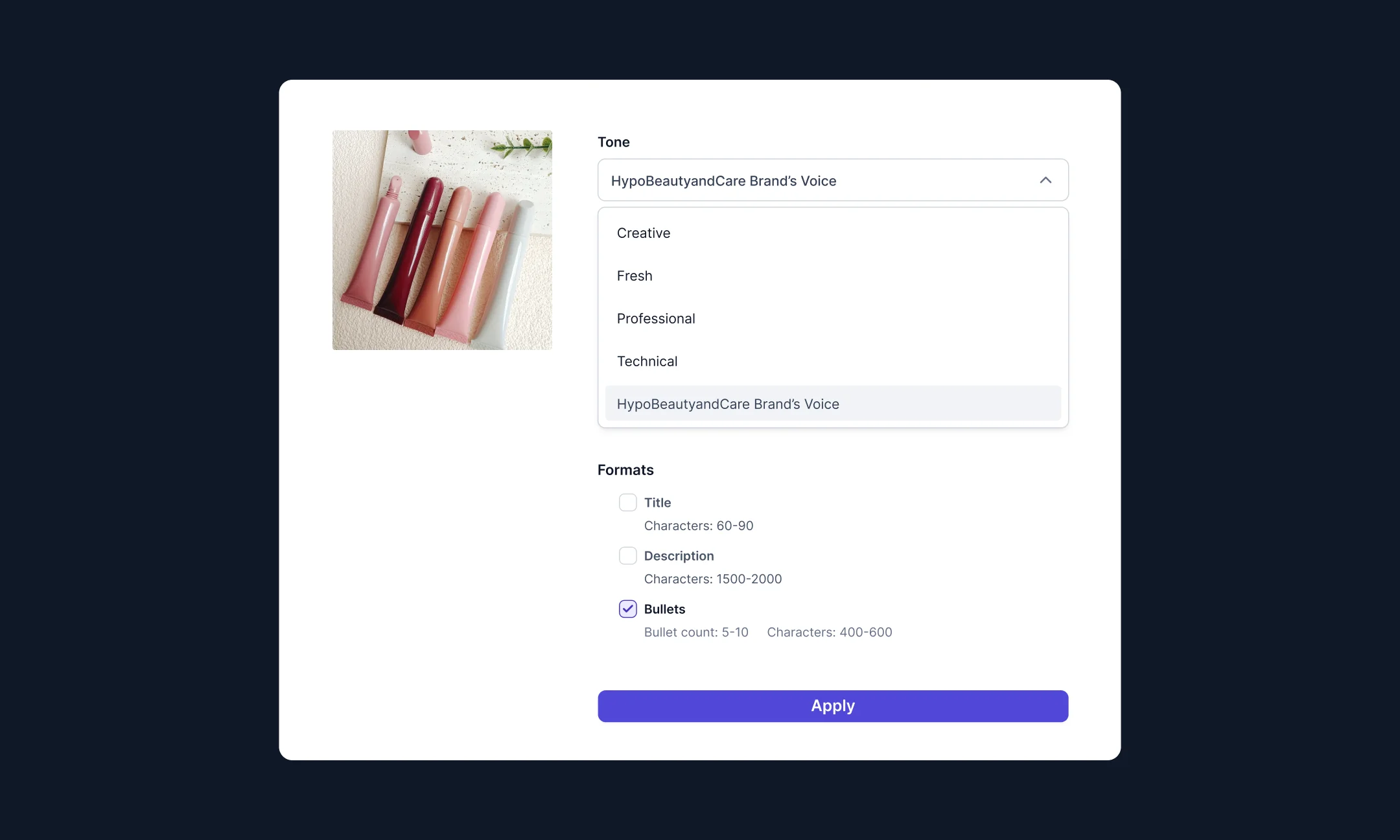
Titles, descriptions and bullets are written in your voice from your own product data, and optimized for search engines and AI answers.
Banned and required terms apply automatically across every category.
Private-label brands and sub-brands can have their own voice alongside the store's.
Check vendor content against your standards
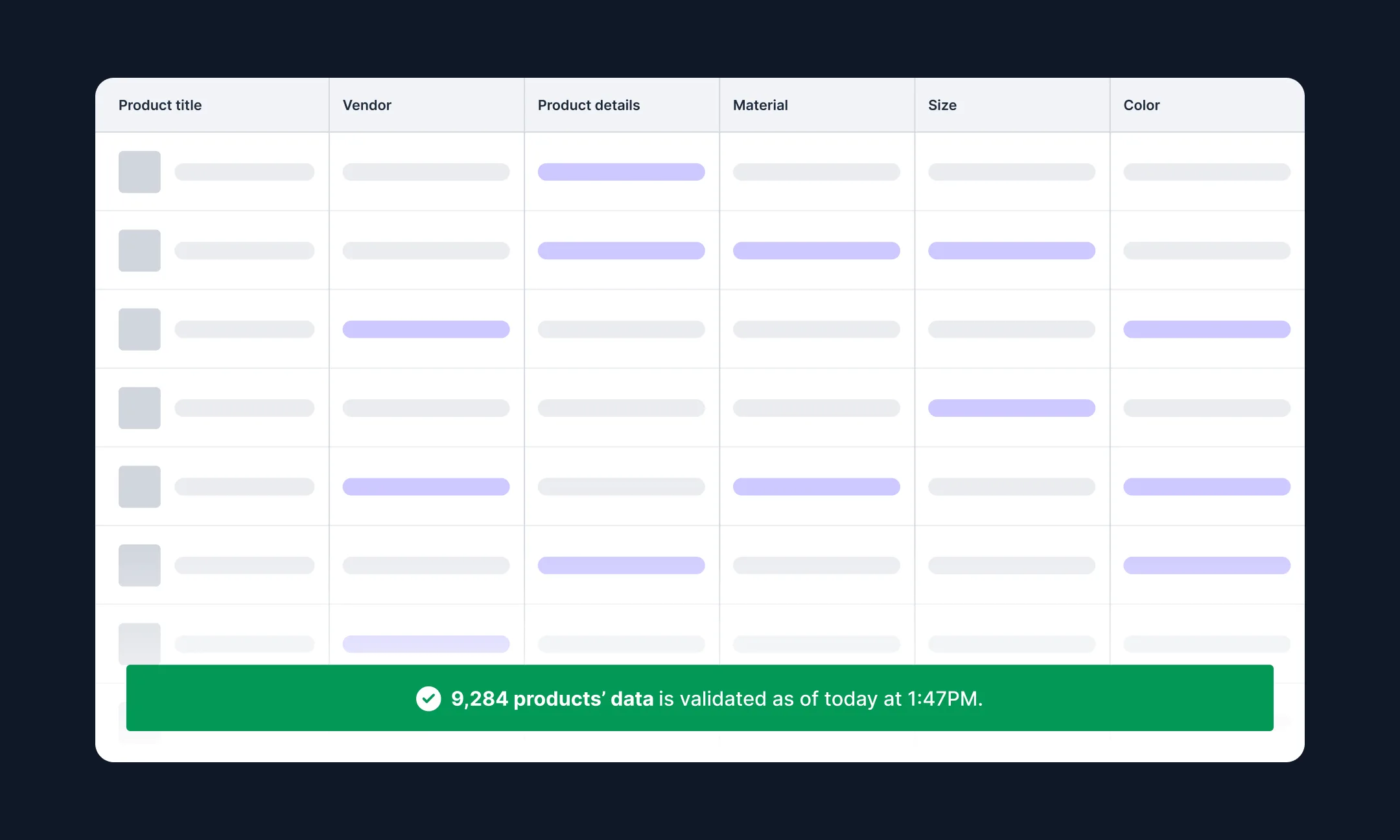
New vendor products are checked as soon as they're imported, and live content can be audited in bulk.
Each category can run its own checker, so beauty claims and apparel labels are checked separately on the same catalog.
Copy, attributes and images that disagree are flagged before they go live, along with the rule that caught them.
Every brand you carry, held to your standards


Frequently Asked Questions
What is a PIM for department stores?

A PIM for department stores collects product data and copy from every vendor brand a store carries, maps it to one store taxonomy and set of attributes, writes listings in the store's own voice and checks each product against store standards before it goes live.
Why do department stores need a PIM?
A department store can carry hundreds of brands across many departments, and each vendor sends data and copy in its own format. Without a PIM, merchandising teams may reformat vendor files by hand, and the same attribute can end up written several ways across brands, which can break search and filters. A PIM brings every vendor's products into one standard.
For example, a women's shoes department may carry ankle boots from 120 brands. One brand lists the heel as "2.5 in". Another writes "Heel height: 6 cm" and calls the same style "our best-selling bootie" in its copy. Without one standard, a shopper who filters for low heels may miss some of the boots, and a vendor's own sales line can end up on the store's product page.
What should a department store look for in a PIM?
- Vendor onboarding that accepts the formats vendors already use.
- One taxonomy across every department, with the right attributes for each category.
- Content in the store's voice, written from product data.
- Checks by category, so beauty claims and apparel rules each get their own rule set.
- Scale. Hypotenuse AI works with enterprise retailers managing anywhere from a few thousand to millions of SKUs.
How do department stores onboard product data from hundreds of vendors?
Vendors submit products in the format they already use through a supplier portal, or the merchandising team uploads on their behalf. AI matches each vendor's fields to the store's attributes and standardizes the values, including grouping sizes and colors into variants. Every product is scored against the store's standards, and anything that falls short is flagged with the reason so the vendor can fix it. See supplier data management.
How can a department store keep one brand voice when vendors send their own copy?
Write listings from the product data in the store's voice. Hypotenuse AI learns that voice from the store's existing product pages and brand guides and applies banned and required terms across every category. Private-label brands and sub-brands can each have their own voice. See brand voice.
How do retailers check vendor product content and images before they go live?
New vendor products are checked as soon as they're imported, with separate rule sets for each category and channel. A claim such as "cruelty-free" is checked against the certifications on the product record, and images are checked for backgrounds, dimensions, resolution and cropping against your image requirements. Reviewers see which rule raised each flag. See the AI compliance checker.
How is a PIM for department stores different from a PIM for distributors?
Both bring in data from many suppliers. A distributor's main job is standardizing technical specs and units from manufacturers. A department store also owns how every product is presented, such as the store's voice and one taxonomy across very different departments. See AI PIM for distributors.
Do we need to replace our current PIM?
No. Hypotenuse AI can run as your PIM, or you can keep your existing PIM and use Hypotenuse AI to onboard and enrich the vendor data that feeds it.


.webp)

.avif)