

AI shopping agents, such as ChatGPT, Google AI Mode and Microsoft Copilot, find and recommend products using product data from your feeds, your product pages and the structured data on those pages. The more complete and accurate that data is, the easier it is for them to match your products to what shoppers ask for.
To know whether your data is complete, you first need to know which fields each platform accepts. OpenAI and Google both publish theirs, so you can compare your data against each list and see where it falls short.
What product data do AI shopping agents use?
Each platform has published notes on where its product information comes from. OpenAI says merchants can send a product feed so ChatGPT can understand their inventory and surface relevant products. Google's AI features use the same Search and Merchant Center data as the rest of Google Search. Microsoft says Copilot uses information from the web and from a merchant's feed in Microsoft Merchant Center.
Put together, the data comes from three places:
- Product feeds sent to the platform, such as OpenAI's product feed for ChatGPT, Google Merchant Center and Microsoft Merchant Center.
- Product pages they crawl on your site.
- Structured data on those pages, the markup that labels price, availability, brand and other fields.
For how AI agents shop on a shopper's behalf, see our guide to agentic commerce. For the protocols behind ChatGPT, Google and Copilot shopping, see our comparison of ACP, UCP, MCP and AP2.
Which attributes do ChatGPT and Google ask for?
OpenAI and Google both publish field specifications for product data, so this section compares those two.
| Field | ChatGPT (OpenAI product feed) | Google Merchant Center |
|---|---|---|
| ID, title, description, product URL, image, price, availability | Required | Required |
| Brand | Required | Required for most new products |
| GTIN | Optional | Required when the manufacturer has assigned one |
| MPN | Optional | Required when there's no GTIN |
| Product category | Optional | Optional |
| Color, size, material, gender, age group | Optional | Required for apparel in some countries, otherwise optional |
| Questions and answers | Not accepted in the feed | Optional |
ChatGPT. OpenAI's product feed specification also requires a seller name, and accepts dimensions, review count and star rating as optional fields. It says a product being eligible doesn't guarantee it will be shown.
Google. Google's guidance on AI features and your website says there are no extra requirements to appear in AI Overviews or AI Mode, and no special structured data to add. Merchant Center also has optional conversational attributes, such as question-and-answer pairs and related products, which Google says help products appear in AI-driven surfaces like AI Mode.
Which attributes help products get recommended?
OpenAI says optional fields can improve answer quality. Google says product identifiers help match products to searches. Neither publishes the actual factors it uses to rank products.
The attributes most likely to help are the ones that answer the shopper's question. For a furniture retailer whose shoppers ask for things like "a pet-friendly sofa under 80 inches wide for a small apartment", that means:
- Width, depth and height, plus seat depth
- Upholstery fabric, and whether it's stain-resistant or a performance fabric
- Whether the cushion covers are removable and washable
- Whether it fits through a standard doorway, and how much assembly it needs
- Color and leg finish
Where this information sits matters too. Put it in prominent places such as the specifications and the description, not only in images or photo captions. Specifications and descriptions are the text that goes into your feed and gets read when your product page is crawled.
Do GTINs and MPNs matter for AI shopping?
Yes, where they exist. A GTIN is the barcode number the manufacturer assigns, and it lets a platform recognize that your listing is the same product it has seen elsewhere. Google says products submitted without a GTIN they have may get limited visibility, and that identifiers help match search queries with products. OpenAI lists GTIN as optional, and tells merchants not to invent an MPN to stand in for a missing GTIN.
For more on how GTINs are shared across the supply chain, see our guide to GDSN.
What if your products don't have GTINs?
Many products don't, including private label ranges, made-to-order furniture and some distributor catalogs. Google's guidance covers these cases:
- Store brands submit the brand and the MPN.
- A manufacturer that is the only seller of its products can use its own product code as the MPN.
- Products with no identifiers at all can be marked as having none.
Never create or copy a GTIN. If your products don't have a GTIN, you'll need to provide more product data. Fill the attributes that describe and distinguish the product as completely as you can.
Does feed data or on-site structured data matter more?
Both matter, because they do different jobs. Neither OpenAI nor Google says one counts more than the other.
- The feed is how your products get into ChatGPT and Merchant Center, and how product changes reach those platforms quickly. Google notes that crawling isn't guaranteed to find every product, and feeds can be updated as often as hourly. OpenAI expects a full feed snapshot at least daily.
- Structured data is read when your product pages are crawled. Google uses it to check your feed against your site. Google's guide to giving Google your product data recommends using both a feed and structured data.
What matters most is that the feed and the structured data agree with each other. If the feed says a sofa is 78 inches wide and the page says 84, one of them is wrong, and an AI answer may repeat it. Across thousands of SKUs, the easiest way to keep them in step is to generate the feed, the page and the markup from one product record. Our guide to product feed optimization covers the feed side. For best practices on adding product structured data, see our guide to structured data for ecommerce.
How is enriching for AI agents different from enriching for SEO or marketplaces?
For marketplaces and SEO, enrichment is mostly about filling required fields and using the terms shoppers search for. For AI agents, it's about stating the specific facts that answer the full questions shoppers ask.
| Enriching for | Main focus | Sofa example |
|---|---|---|
| Marketplaces | Filling every field each marketplace requires, in the format it asks for | Filling in the width, depth and assembly fields a marketplace requires before it will list the sofa |
| SEO | Including relevant high-volume search terms in titles and copy, plus structured data | Using a term shoppers often search for, such as "3-seater velvet sofa", in the product title |
| AI agents | Including specific facts that answer a shopper's question | Stating that the sofa is 78 inches wide, uses stain-resistant velvet, has removable covers and fits through a 30-inch doorway, so it can answer "Will this fit my apartment, and will it hold up to my dog?" |
Adding an FAQ section is one way to include those facts. Put answers in the product description where they fit naturally. Where they don't, add them as FAQs on the product page, where they can be crawled and quoted. Google Merchant Center also accepts question-and-answer pairs as an optional feed attribute, so add them to your Merchant Center feed if you use one. OpenAI's product feed doesn't take them, so for ChatGPT they need to be on the page.
How can you improve the chances of products showing up for natural-language queries?
Shoppers ask AI in everyday words, while product data is often written in technical ones. Describe products in the words shoppers use:
- Instead of only stating that the sofa uses "performance velvet" or a "stain-resistant finish", also describe it as "pet-friendly".
- Instead of only stating the width, describe it as "apartment-size" or "suitable for small spaces".
- Instead of only saying the sofa "ships in 2 boxes, no tools needed", tell shoppers it's easy to assemble.
Add use-case tags too, such as "small apartment" or "family room", so products are more likely to match questions about where and how they'll be used. Keep the technical values as well, since some shoppers and channels search for those.
How does Hypotenuse AI help with product data for AI shopping?
| Task | How Hypotenuse AI helps |
|---|---|
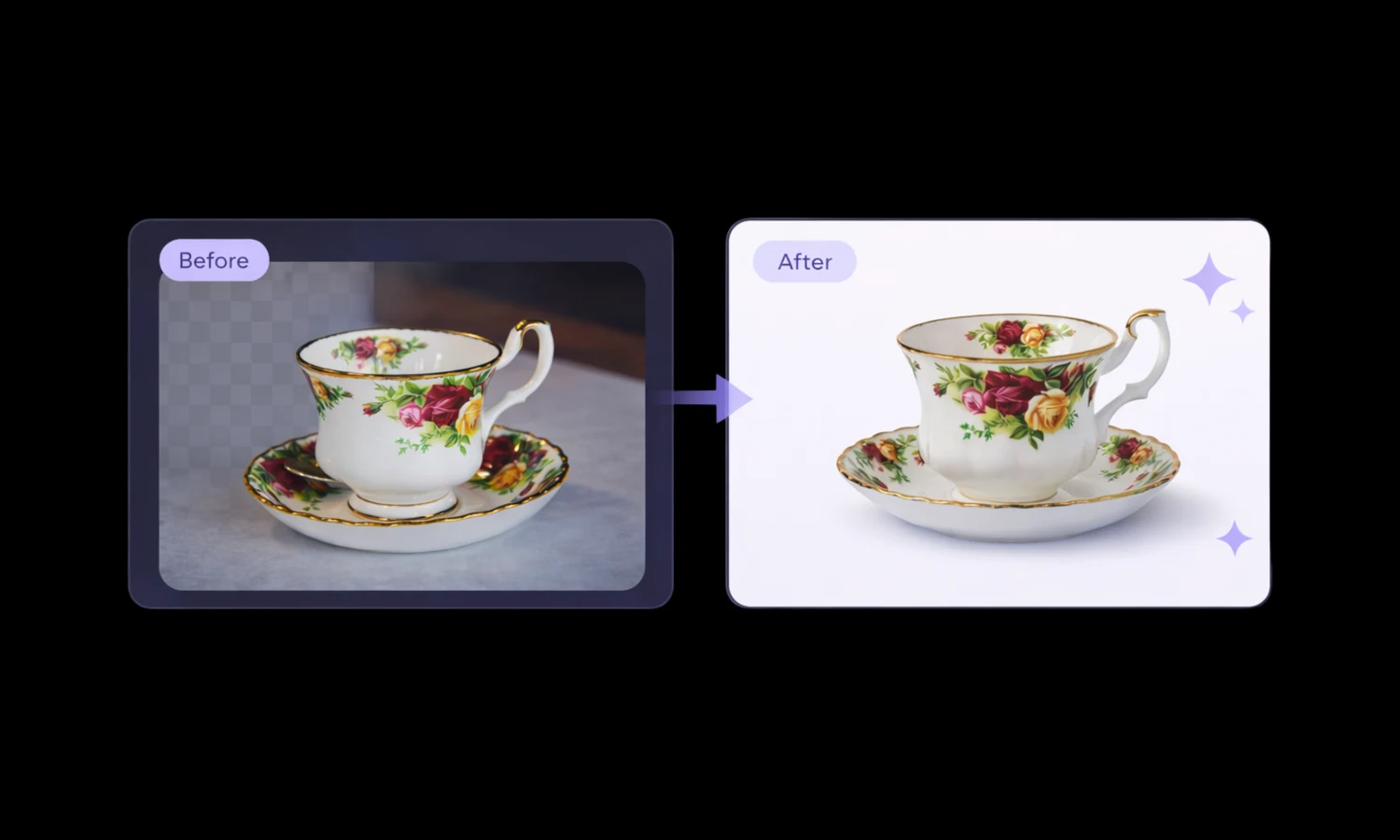
| Filling attributes | Fills missing attributes from product images, spec sheets, supplier feeds and the web, with a source and confidence score on every value. |
| Shopper language | Rewrites inconsistent values with keyword-relevant, shopper-friendly language, so listings are both structured and search-aligned. |
| Use-case tags | Adds shopper-facing tags such as use case and occasion alongside spec attributes, including the alternate terms and misspellings shoppers use. |
| Structured data | Generates structured markup and FAQ schema so products surface in rich results and get cited by AI search. |
| Search and AI answers | Optimizes taxonomy, attributes, product content and feeds for search engines and AI answer engines. |
See how Hypotenuse AI handles SEO and GEO.
FAQs
Is there special schema markup for AI search?
No. Google says there's no special structured data needed for AI Overviews or AI Mode. Standard product structured data that matches the visible page is what it asks for.
Does submitting a feed guarantee products appear in ChatGPT?
No. OpenAI's spec says eligibility doesn't guarantee a product will be shown. The feed makes your products available, and the quality of the data affects how well they match questions.
Do AI shopping agents use product reviews?
OpenAI's feed accepts a review count and star rating as optional fields. Raw review text and question-and-answer lists aren't part of its feed, so put key answers in your description and on the product page.


.avif)