






.svg)




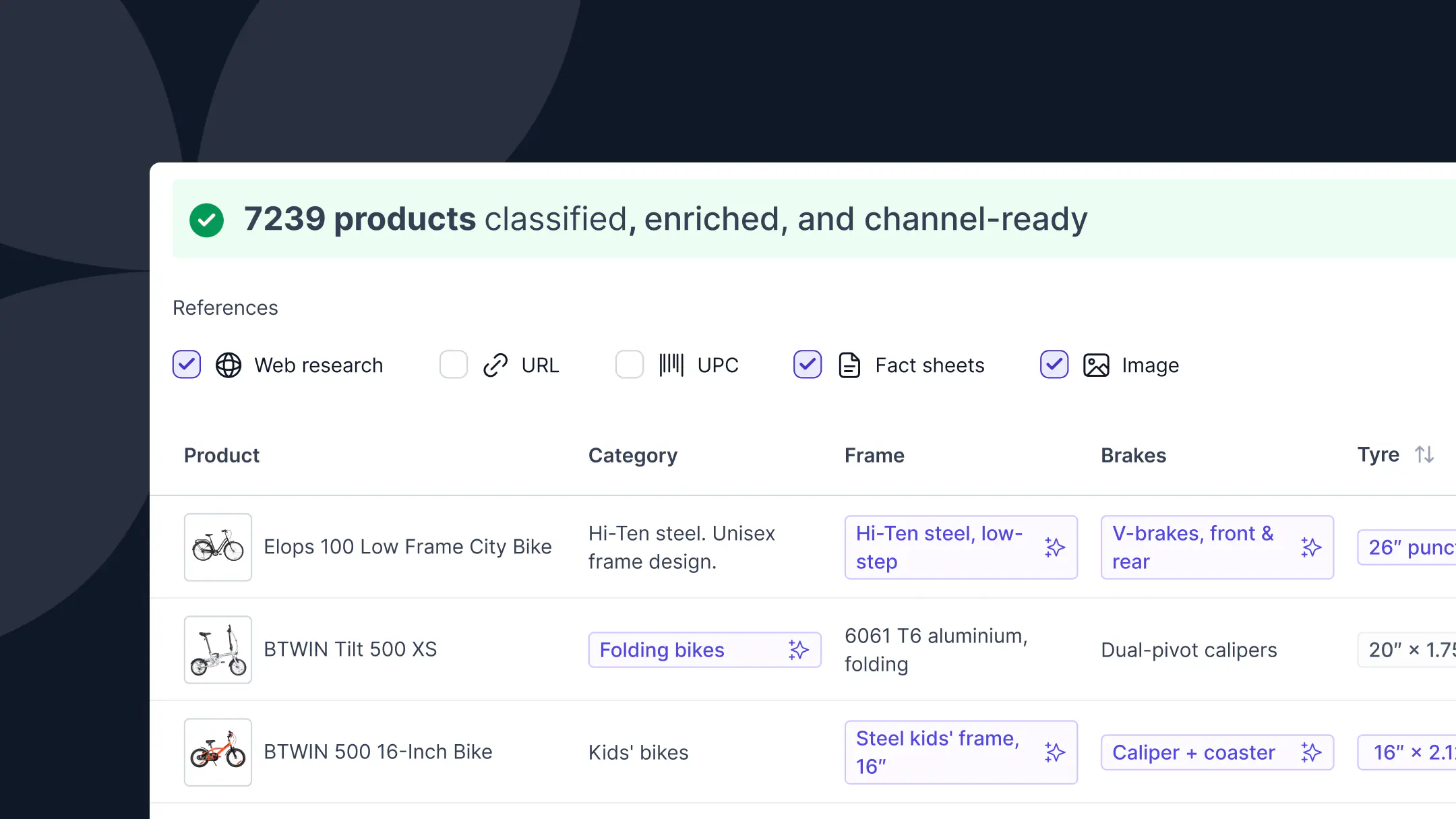
Product experience management (PXM) is the practice of managing everything a customer experiences about a product: the data, the content, the images, and how they appear on each channel. A PXM platform is the software that runs it, taking product information from raw and inconsistent to complete, on-brand, and channel-ready.
Instead of a patchwork of tools (a PIM, a DAM, a translation vendor, and spreadsheets), it brings everything into one system, so every new product and every update stays accurate across every channel.


AI-native from the ground up
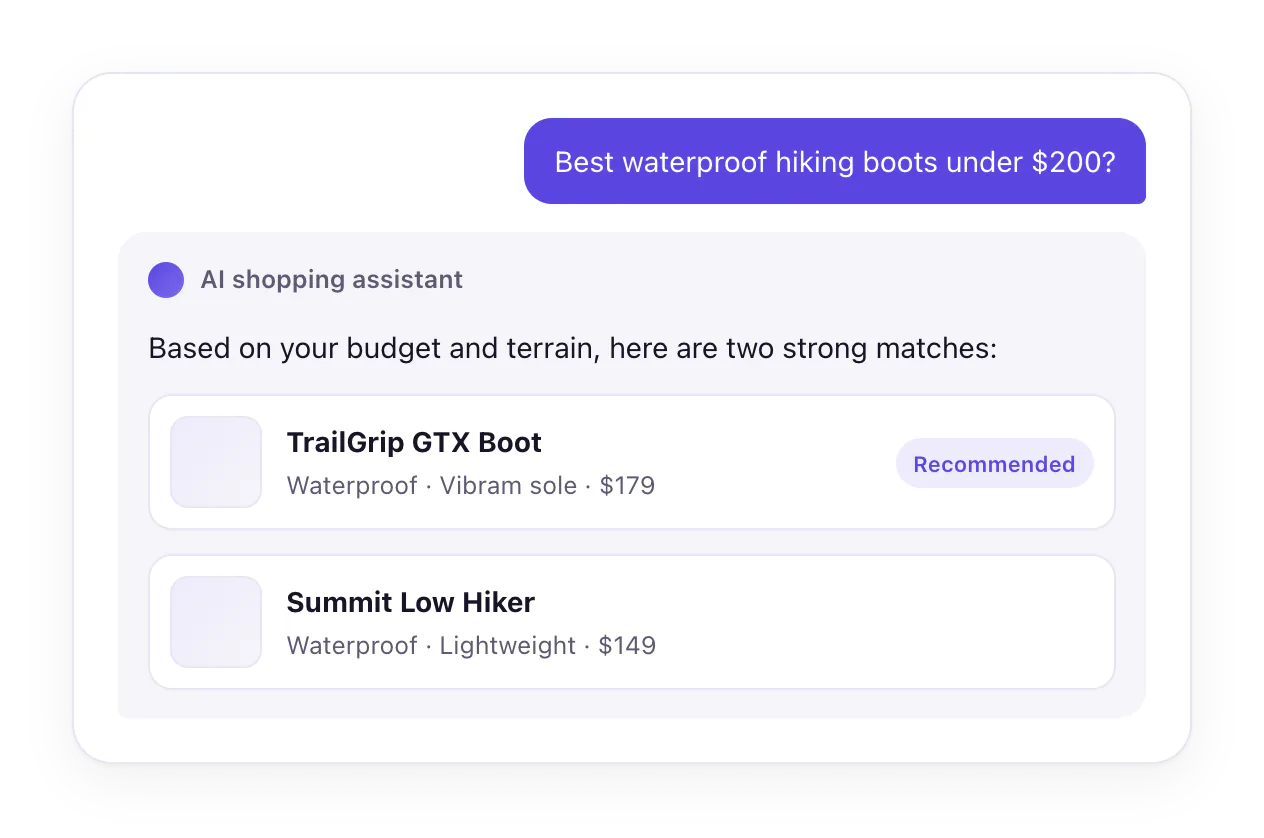
Get recommended by AI shopping assistants
Who is Hypotenuse AI's PXM built for?


Frequently Asked Questions About AI Product Data Enrichment Software
What is product experience management (PXM)?

Product experience management (PXM) is the practice of managing everything a customer experiences about a product across every channel: its data, content, images, and how it is presented. It goes beyond storing product information to actively enriching it, creating content and images from it, and keeping it consistent everywhere shoppers meet your products. Learn more about PXM.
What's the difference between PXM and PIM?
A PIM (product information management) system stores and governs product data. A PXM platform does that and adds the layer built on top: content generation, image editing, localization, and channel optimization. In short, PIM keeps your data right; PXM makes it convert everywhere. See the full comparison.
What makes a PXM platform AI-native?
An AI-native platform has intelligence built into its foundation rather than added as features. Enrichment, content generation, and image editing happen inside the system where your data lives, continuously and at scale, instead of relying on manual work or separate point tools.
What's the best PXM platform for ecommerce?
The right platform depends on what your team spends time on. If your bottleneck is not just storing data but enriching it, writing content, editing images, and localizing across channels, an AI-native PXM like Hypotenuse AI handles all of it in one governed system rather than a PIM plus several point tools.
How does a PXM help with AI search and shopping assistants?
AI assistants and shopping agents read structured product data to decide what to recommend. A PXM keeps your attributes complete, accurate, and consistent, which is what makes products eligible to be surfaced and recommended in AI search and AI Overviews.
Does a PXM replace my PIM?
Yes. Hypotenuse AI includes an AI-native PIM and can be the system of record for your product data. If you already run a PIM you want to keep, it works alongside it, adding enrichment, content, images, and channel optimization. Either way, you don't run a separate PIM and PXM.
Who is a PXM platform for?
Brands, retailers, and distributors managing product data and content at scale, across large catalogs, many suppliers, and multiple sales channels, in industries from fashion and electronics to furniture and industrial supplies.
Learn more about product experience management


Product Data Enrichment: Why It’s Essential for Ecommerce Success
Product data enrichment helps enrich your product data with relevant information automatically pulled from the web. In this article, we'll discuss what it is, why it’s important for ecommerce brands, and how you can harness its power to level up your product pages.

.avif)