

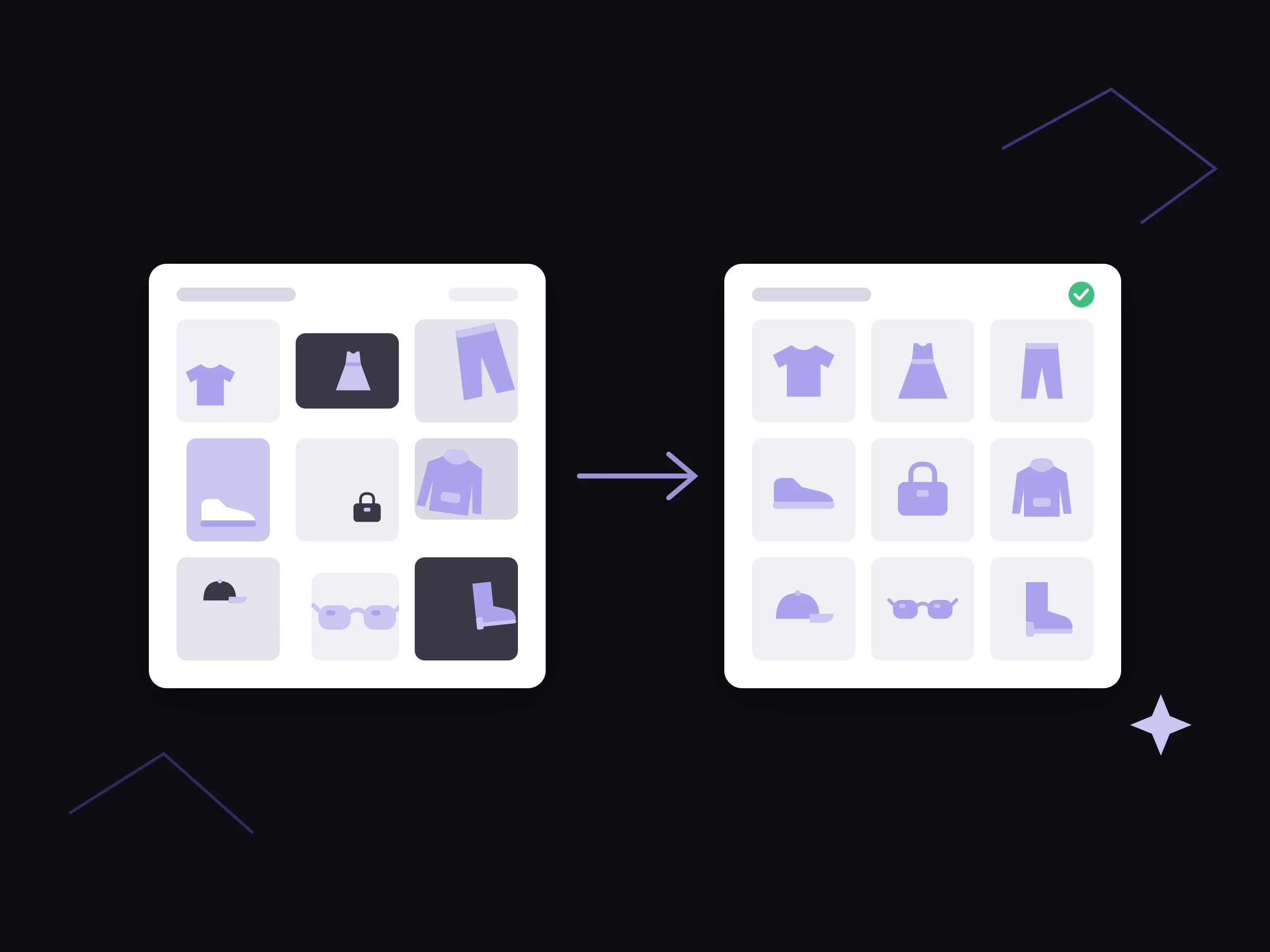
A distributor's catalog is built from other companies' product data. An automotive parts distributor might receive fitment data as a spreadsheet from one manufacturer and as a PDF catalog from the next. A beauty wholesaler might get ingredient lists and shade names in a different layout from every brand it carries.
The PIM you choose decides how much of that clean-up your team does by hand. This guide compares seven PIM platforms through a distributor lens: supplier data, technical attributes, categorization and channel-ready data for your partners.
What is PIM for distributors?
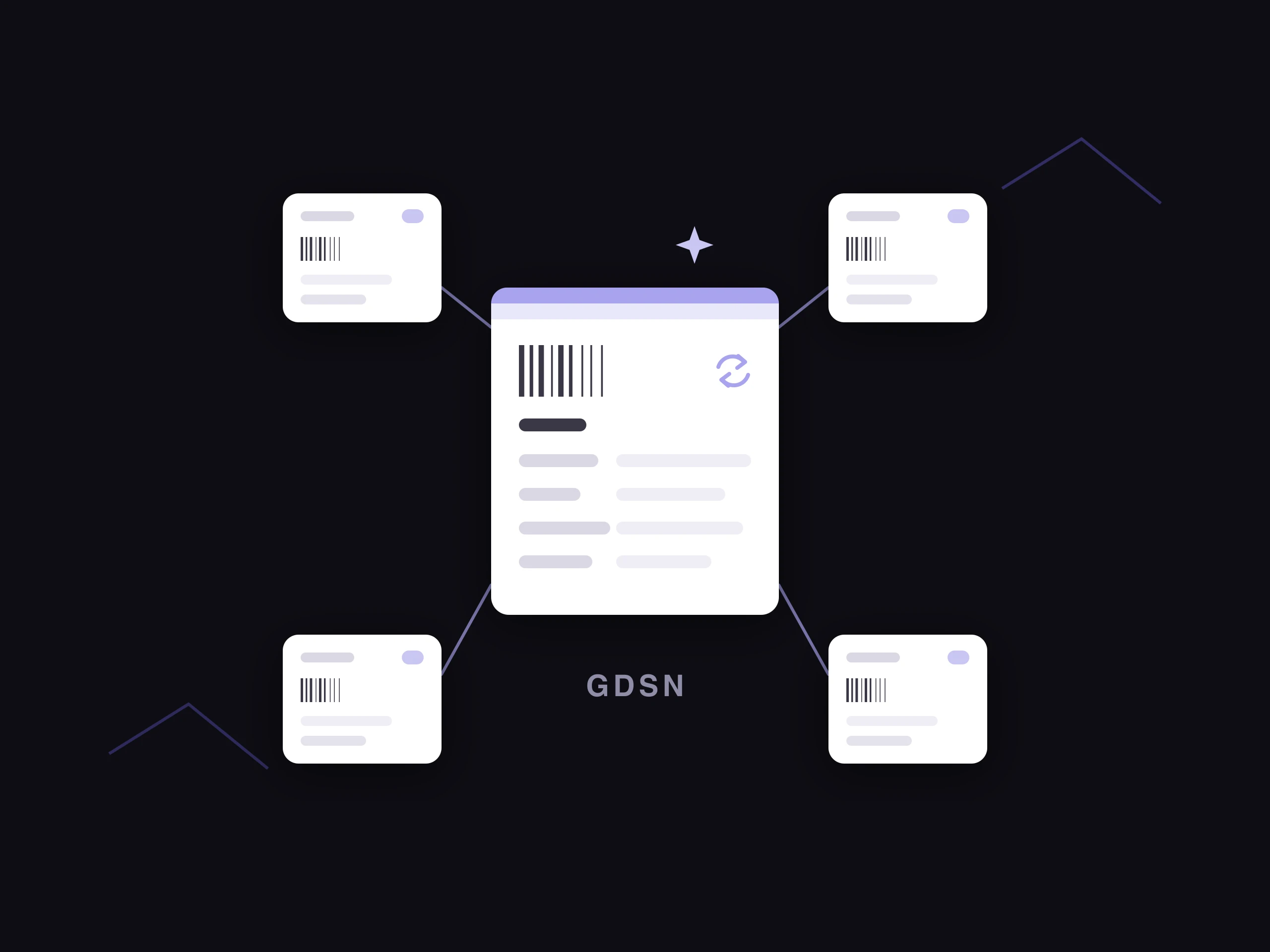
PIM (product information management) for distributors is software that collects product data from many manufacturers, standardizes it into one schema, enriches it with the attributes buyers search and filter on, and prepares a version of each product for every channel the distributor sells through.
It holds specifications, descriptions, images and documents in one catalog, and connects to the other systems you run, such as your ERP and ecommerce platform.
How is PIM for distributors different from PIM for brands or retailers?
A brand mostly manages data it writes about its own products. A distributor takes in data from many manufacturers and sends it out to many customers and channels, so its PIM carries load at both ends.
That shows up in four places:
- Many formats coming in. Every manufacturer sends data in its own file type and structure. A food service distributor can receive allergen details as a spreadsheet column from one supplier and inside a PDF spec sheet from another.
- Large, specification-heavy catalogs. Buyers choose between similar products on specifications, and there are too many products to complete and check by hand.
- Constant supplier changes. Manufacturers update specifications and replace discontinued items throughout the year, across every brand the distributor carries.
- Many channels going out. Webshops, B2B ordering portals, dealers and retail partners each expect their own fields and formats.
Comparison table
| Platform | Best suited to | Supplier onboarding | Catalog size | G2 |
|---|---|---|---|---|
| Hypotenuse AI | Distributors with large catalogs who want supplier data turned into enriched, channel-ready content inside one AI-native PIM | Supplier portal. Suppliers submit in their own format and AI maps it to your schema | Enterprise | 4.7 |
| Inriver | Enterprise distributors with complex catalogs | AI-powered content onboarding | Enterprise | 4.2 |
| Akeneo | Distributors who want a central PIM with retailer and marketplace connections | Supplier Data Manager, with shared templates for suppliers | Mid-market to enterprise | 4.4 |
| Pimcore | Technical teams who want to build and extend their own platform | File imports, with APIs for larger feeds | Mid-market to enterprise | 4.5 |
| Salsify | Distributors onboarding many suppliers | Supplier Experience Management (SXM) | Enterprise | 4.4 |
| Syndigo | Distributors sending product data to large retail networks | Vendor onboarding with content grading | Enterprise | 4.4 |
| Pimberly | Distributors wanting PIM and DAM together | Vendor Portal module | Mid-market to enterprise | 4.4 |
What should distributors look for in PIM software?
Baseline PIM features, such as a central catalog and approval workflows, matter to every business. These five carry extra weight for a distributor.
Supplier data in any format
A distributor can't ask every manufacturer to change how it sends data. The PIM has to accept supplier data in whatever file type and structure it arrives in, and transform it into your own schema.
For example, one manufacturer sends a spreadsheet with a column called "Colour/Finish". Another sends a PDF catalog with the same detail in a table. Both should end up in your color and finish attributes without anyone rebuilding the file.
Technical attributes in consistent units
Buyers filter by specifications such as voltage or size.
Filters work best when every manufacturer's value uses the same unit and format. For example, one manufacturer lists a circuit breaker's rating as "20 amps" and another writes "20A". When the PIM converts both to "20A", a buyer filtering for 20A sees every matching breaker.
Look for a PIM that converts units and naming to your standard automatically, and flags missing or conflicting values before a product goes live.
Categorization into your taxonomy
Distributors often manage thousands of categories, and every new product has to be placed in the right one.
When each product sits in the right category, buyers find it wherever they browse and filter. For example, a USB-C charging cable placed under phone accessories shows up for buyers shopping for phone chargers.
Ask how the PIM assigns new products to your categories automatically, and how your team reviews the categorization results.
A version of each product for every channel
Your webshop and each dealer or retail partner need different information about the same product.
For example, your B2B ordering portal may need case pack and minimum order quantity, while a retail partner needs a shorter title and bullet points in its own template.
Look for a PIM that keeps one master record and creates a version of each product for each channel, with that channel's required fields checked.
Easy review of AI-filled data
When AI fills in supplier data across thousands of products, your team needs to check the results quickly.
Make sure the PIM shows supporting information, such as where each value came from, so reviewers can confirm it without researching the product again.
Does a distributor need a PIM if it already has an ERP?
Usually yes, once the catalog is large or sells through more than one channel.
An ERP is built for orders and stock. It stores basic product records, but it can't enrich them or create a different version of a product for each channel.
The two work best connected. The ERP stays the record for pricing and inventory, and the PIM manages the product information buyers see.
Best PIM software for distributors
Here are seven PIM platforms worth comparing for distribution. Baseline PIM features are assumed, so each entry covers what matters for distributors.
Hypotenuse AI
Hypotenuse AI is an AI-native PIM that turns supplier data from many manufacturers into complete, channel-ready listings, across catalogs from a few thousand SKUs to millions, and connects to your ERP, ecommerce platform or existing PIM.
- Suppliers submit in their own format. AI maps each file to your schema, standardizes values and scores every product against your standards before it reaches your catalog.
- Enrichment with a source for every value. Missing attributes are filled from spec sheets and trusted websites, with the source shown for review.
- Categorized and written for search. Products are classified into your taxonomy, and descriptions are generated in bulk for SEO and GEO, in your brand voice.
Rated 4.7 on G2.
See supplier data management for how onboarding works end to end, and AI PIM for distributors for how it fits a distributor's catalog.
Inriver
Inriver is an enterprise PIM with dedicated guidance for distributors.
- AI content onboarding. AI-powered onboarding takes in supplier data in different formats and standardizes it.
- Built for large catalogs. It handles high SKU counts and growing product ranges.
- ERP connections. Product data syncs in from ERP and PLM systems.
Rated 4.2 on G2.
Akeneo
Akeneo positions its Product Cloud for retailers and distributors, with supplier onboarding alongside the core PIM.
- Supplier Data Manager. Suppliers get a web portal with shared templates and guidelines, and data is checked against your data model before it enters the PIM.
- AI classification at onboarding. AI classifies products into your families and categories, and enriches attributes from product descriptions and titles.
- Channel activation. Sends product data to retailers and marketplaces.
Rated 4.4 on G2.
Pimcore
Pimcore is an open-source platform that combines PIM, MDM, DAM and CMS. Technical teams can extend its data model and integrations.
- Flexible data model for technical catalogs. Products, variants, spare parts and supplier relationships can be modeled to fit your business.
- Many import formats. Supplier files load in CSV, XML, JSON or XLSX, with mapping during import.
- Deployment choice. Runs on your own servers or in the cloud.
Rated 4.5 on G2.
Salsify
Salsify is a product data platform used by manufacturers and retailers. Its Supplier Experience Management product (SXM) is built for onboarding suppliers.
- Supplier onboarding. SXM combines automated and assisted onboarding, with schema checks and corrections made inside the platform.
- AI for technical documents. AI workflows extract product data from PDFs.
- Flexible data model. SXM supports a customizable data model for supplier content.
Rated 4.4 on G2.
Syndigo
Syndigo is a product data platform focused on sending product content to retailers.
- Retailer reach. Built for getting product content onto retail partner sites in the format each one requires.
- Supplier content checks. Supplier content is graded automatically, and suppliers get feedback on what to fix.
- Rich media alongside core content. Core product content and rich media sit in one place.
Rated 4.4 on G2.
Pimberly
Pimberly is a SaaS PIM with built-in DAM and solutions for distributors.
- Vendor Portal. Suppliers add and update product information directly, and data is checked against your requirements.
- ERP and commerce integrations. Connects to ERPs such as Microsoft Dynamics 365 and SAP, and to commerce platforms such as BigCommerce and Shopify.
- Product codes. Assigns standard product codes such as GTIN and UPC.
Rated 4.4 on G2.
How do I choose the right PIM for my distribution business?
Start from the bottleneck your team spends the most time on.
| If your biggest bottleneck is | Look closely at |
|---|---|
| Onboarding data from many manufacturers in different formats | Hypotenuse AI, Inriver |
| Onboarding data from manufacturers who won't use your template | Hypotenuse AI |
| Filling missing technical attributes across a large catalog | Hypotenuse AI |
| Sending product data to many retail partners | Syndigo, Akeneo |
| A developer-led build with full control of the data model | Pimcore |
For a broader comparison across retailers and brands, see our guide to the best PIM software for ecommerce. If you are replacing an existing system, our guide to PIM migration covers how to plan the move.
FAQ
Can a PIM handle supplier data in different formats?
Some can. Hypotenuse AI takes supplier data as it arrives and maps it to your schema.
Can I add AI enrichment without replacing my current PIM?
Yes. Hypotenuse AI can run alongside an existing PIM such as Akeneo or Salsify, enriching data and generating content before sending it back into your stack. If you decide to switch platforms later, see our PIM migration guide.
See how Hypotenuse AI works with your supplier data. Get in touch with our team to find out more.



.avif)